

How to Grow Wax Vines and Get Them to Bloom
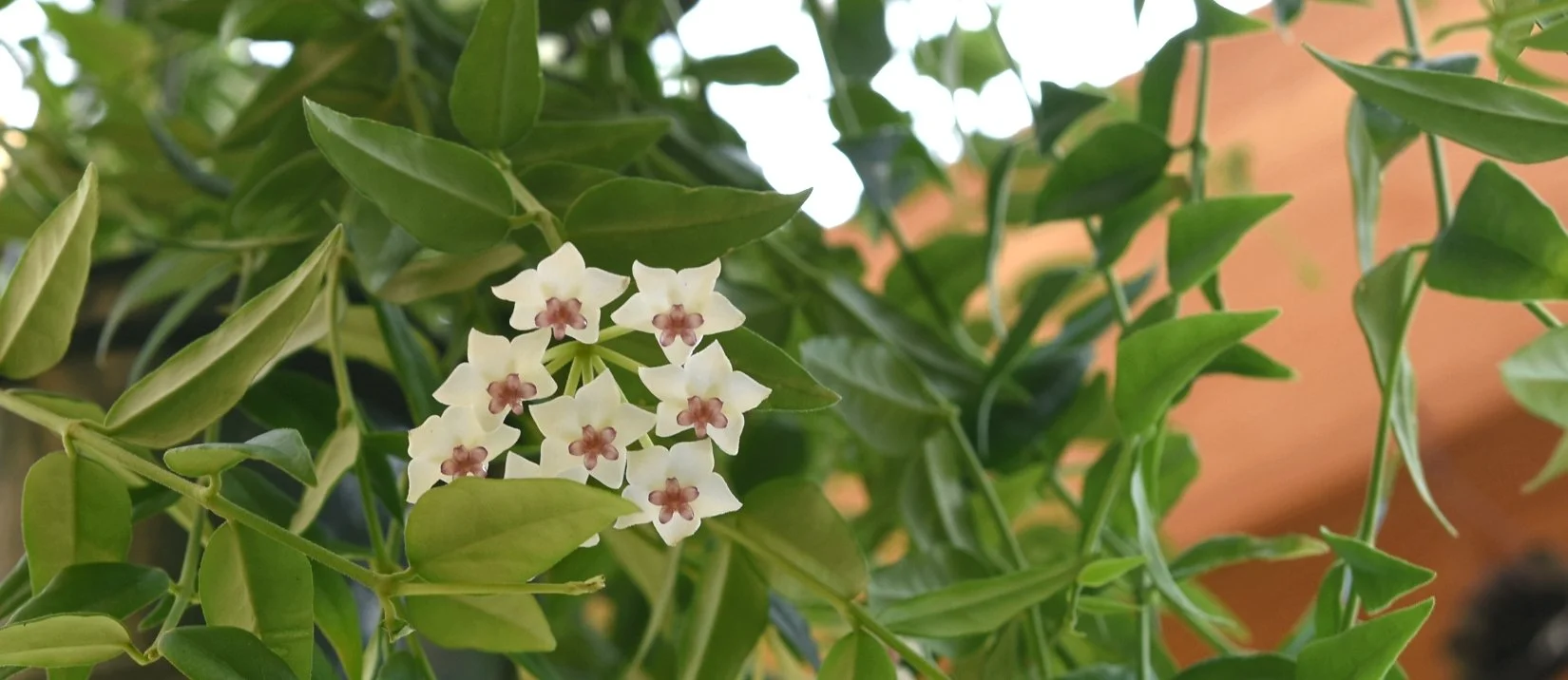
If you remember a vine creeping around your grandmother’s kitchen, chances are it was a Hoya plant. This tropical indoor plant — often called a “wax plant” due to its thick waxy leaves — is a classic because it lives forever, grows to be enormous, and creates beautiful, porcelain-like fragrant flower clusters. (It’s also often called “Porcelain flower.”) This article is all about Hoyas, growing them as houseplants, and getting them to bloom.
General Tips for Growing Hoya
Soil Choice: Hoyas can be grown in an airy, well-draining mix and need water more frequently, or they can be potted with a more traditional houseplant or succulent soil blend with less frequent waterings. Although chunkier mixes require more attentive care, plants grow faster and stronger with airy soil blends. Common Hoya soil blends amend succulent soil with perlite and orchid bark.
Pruning: Don't cut the long tendrils! These plants send out long tendrils that fill in with leaves and peduncles over time. Also, don’t cut off the peduncles after blooming! Many species rebloom on the same peduncles for years.
Propagation: Propagate Hoya plants from stem cuttings or by air layering. Be sure to include a couple healthy leaves! It's not impossible to propagate Hoyas from a leafless cutting, but it's way more risky!
Repotting: Hoyas don’t mind being root bound. Keep in the same pot for years, but remember to fertilize throughout spring and summer. When you choose to repot, be extra kind to the plant: Repot in spring, wait to repot 2-3 days after your last watering, and be very gentle with the roots. There's no need to strip away all the old soil, just knock off anything that's loose.
Choosing a planter: Hoyas always prefer planters with drainage. These plants are very sensitive to too much water. For extra air flow, choose an unglazed terracotta planter.
Sunstress: A recent plant trend is "sun-stressing" Hoyas. When Hoyas receive strong direct light, they can change color to protect their leaves, similar to how humans tan. If you want to try this out, make sure you go slow. It takes a while for humans to build a base tan to avoid sunburns, and the same goes for Hoyas!
Hoya Blooms
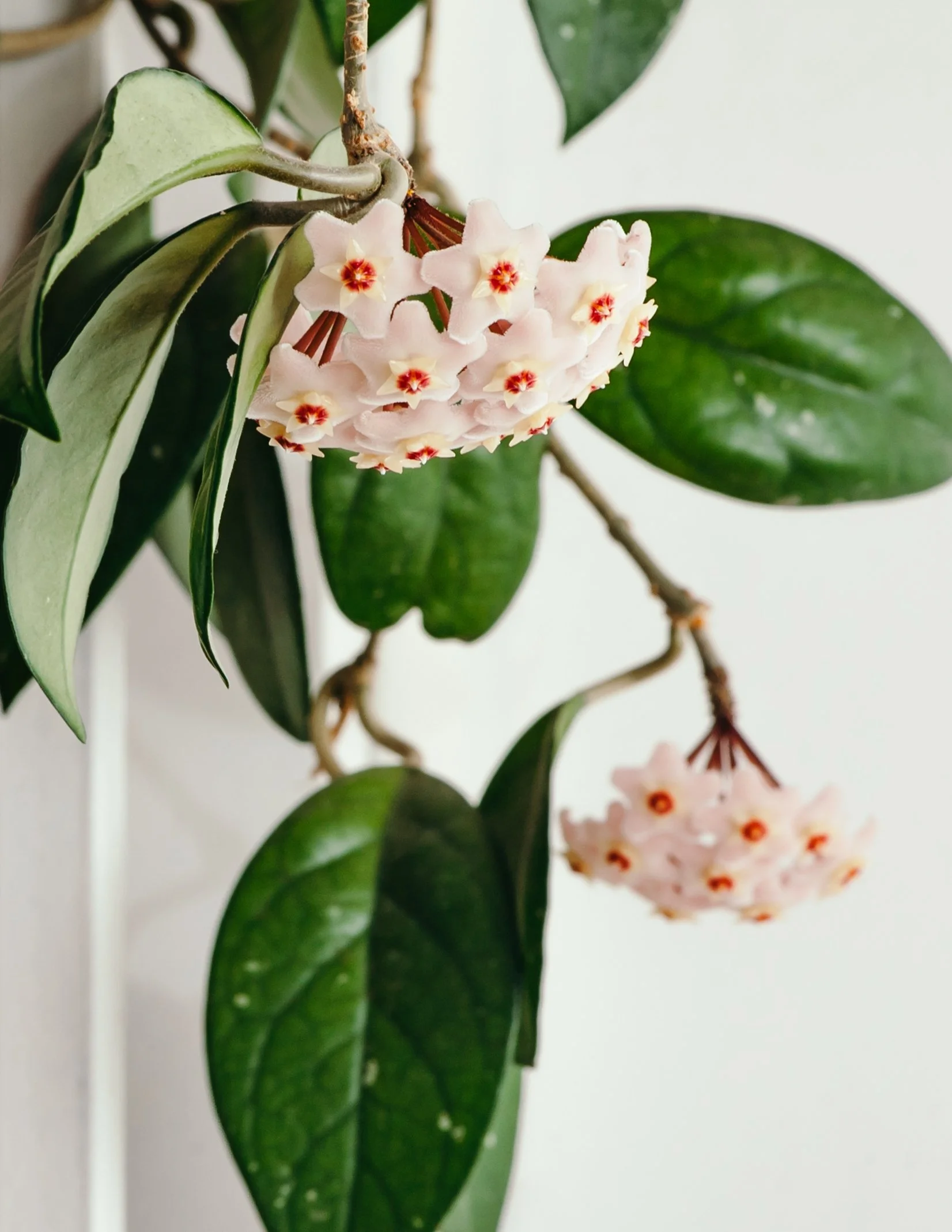
It’s hard to predict when these plants will flower, as it occurs when the plants reach maturity. When are they mature? Depends on the growing conditions! But rumor has it that keeping your plant tightly root-bound (in a smaller than normal pot) will accelerate the flowering process. These plants seem to grow (1) roots first, (2) tendrils second, (3) leaves third, and (4) flowers last.
When a plant is planning to bloom, it grows a little structure off of the vine, usually at a node, called a “peduncle.” This structure holds the flowers through the blooming process. When our plants are growing peduncles, buds, and flowers, we try to make sure they never go bone-dry, making sure the plant has enough resources to grow the impressive flowers.
There are two main methods for getting a Hoya to flower: Make it really happy or make it really stressed.
Method 1: The Happy Method
If a plant feels secure in its pot, is receiving appropriate light, is receiving appropriate water, and is being fertilized through the spring and summer, you will be rewarded with huge gorgeous blooms.
Give your plant time to grow into its pot, and don't plant your Hoya into too big of a pot!
Most Hoyas prefer bright, indirect light. A little direct sun is okay.
Water when the substrate is dry, preferably before the leaves start to pucker. Hoyas prefer more regular water in the spring and summer, during active periods of growth. Withhold water in the winter to prevent rot.
During the growing season, we like to fertilize weakly and often. You can fertilize every watering or every other watering, but since these plants like to dry out, use an organic fertilizer low in salts to protect sensitive Hoya roots.
Method 2: The Stress Method
When a plant is very stressed, it tries its hardest to procreate before it no longer has the opportunity. Hoyas with thick, succulent leaves respond well to this method, but be careful trying this with thin-leaved varieties without proper research.
Give your Hoya bright, indirect light and withhold watering for 4-5 weeks. There is some danger of developing desiccated or dry-rotted roots, but you should see blooms before that!
Gently ease your plant back into watering when buds start to form. Too much water too fast could cause issues if any dry rot has occurred.
Many Hoyas are succulent because they have adapted to seasonal droughts, like Hoya carnosa. Withholding water for a few weeks in the spring is an easy way to help Hoya carnosa bloom. We’ve also experienced Hoya shepherdii react to drought with an abundance of blooms.
Our 5 Favorite “Standard” Hoyas
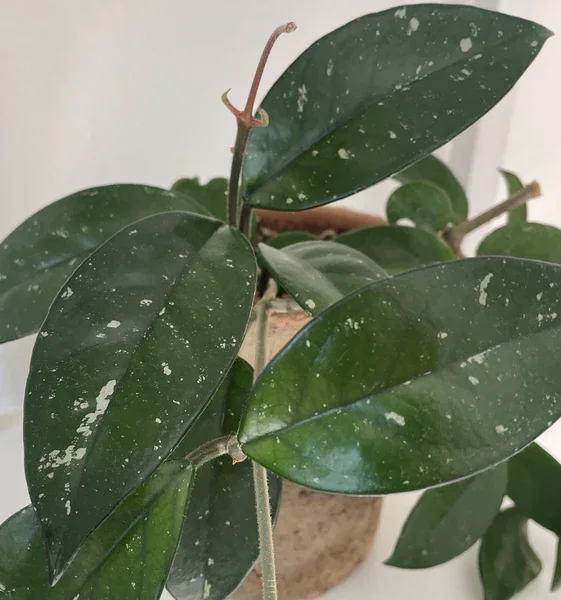
Hoya carnosa
Why it’s special: This is the classic wax plant our grandparents grew. Dark green, large, almond-shaped leaves grow on long vines, which will eventually put out creamy flower clusters.
What it likes: Medium to bright indirect light. Less is more when it comes to watering; we like to wait until the leaves pucker slightly.
What it dislikes: Lots of direct sun, artificial light, dark corners.
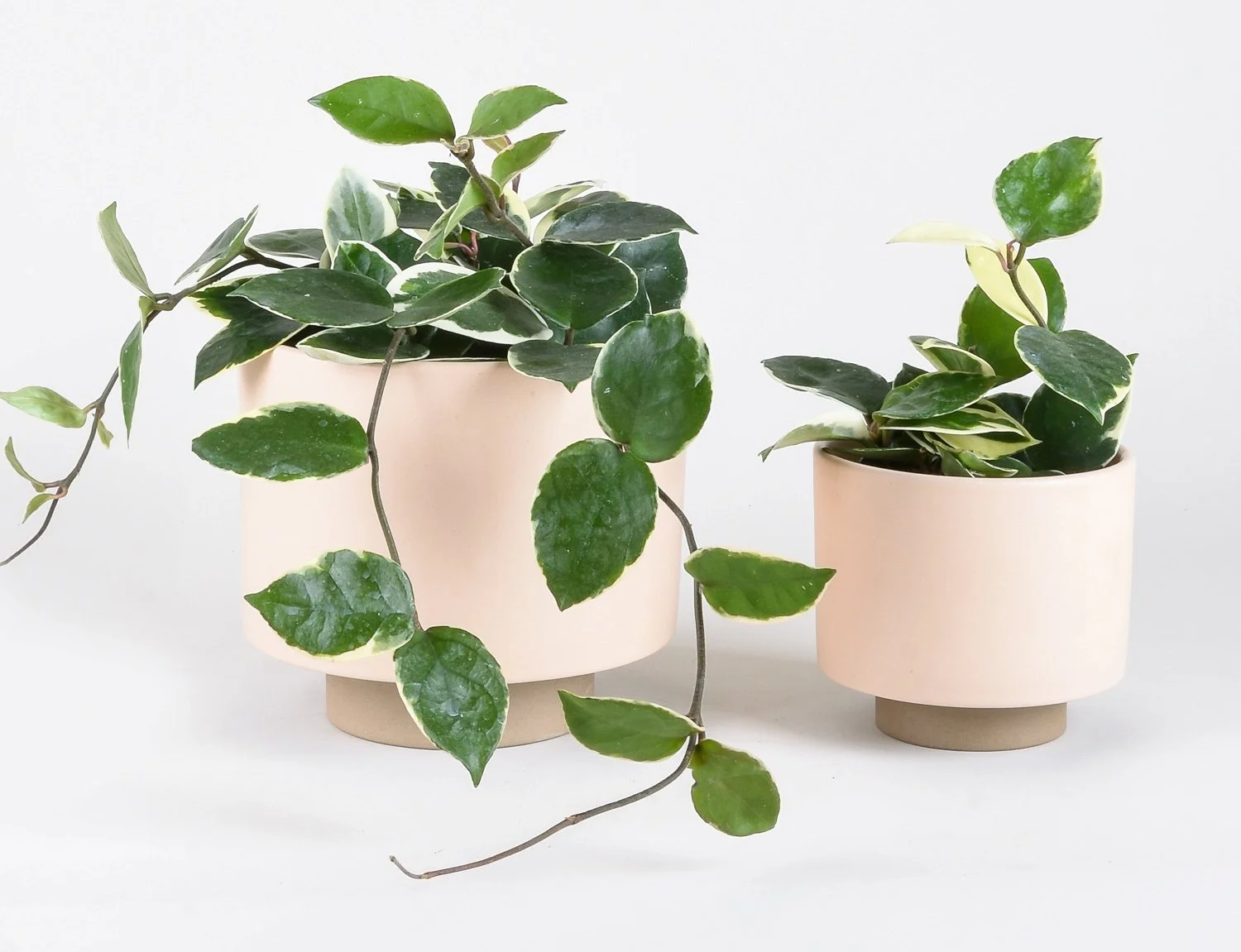
Hoya carnosa ‘Krimson Queen’
Why it’s special: Everything you love about the classic carnosa, but with leaves lined in white and pink. Sometimes called ‘Tricolor,’ this Hoya sometimes has stems of bright pink and solid white leaves. A stunner!
What it likes: It prefers very bright, but indirect light, to thrive. Also enjoys heat and high humidity. Follow watering procedure for normal carnosa, above.
What it dislikes: Low light, cold drafty windows. Particularly sensitive to over-watering.
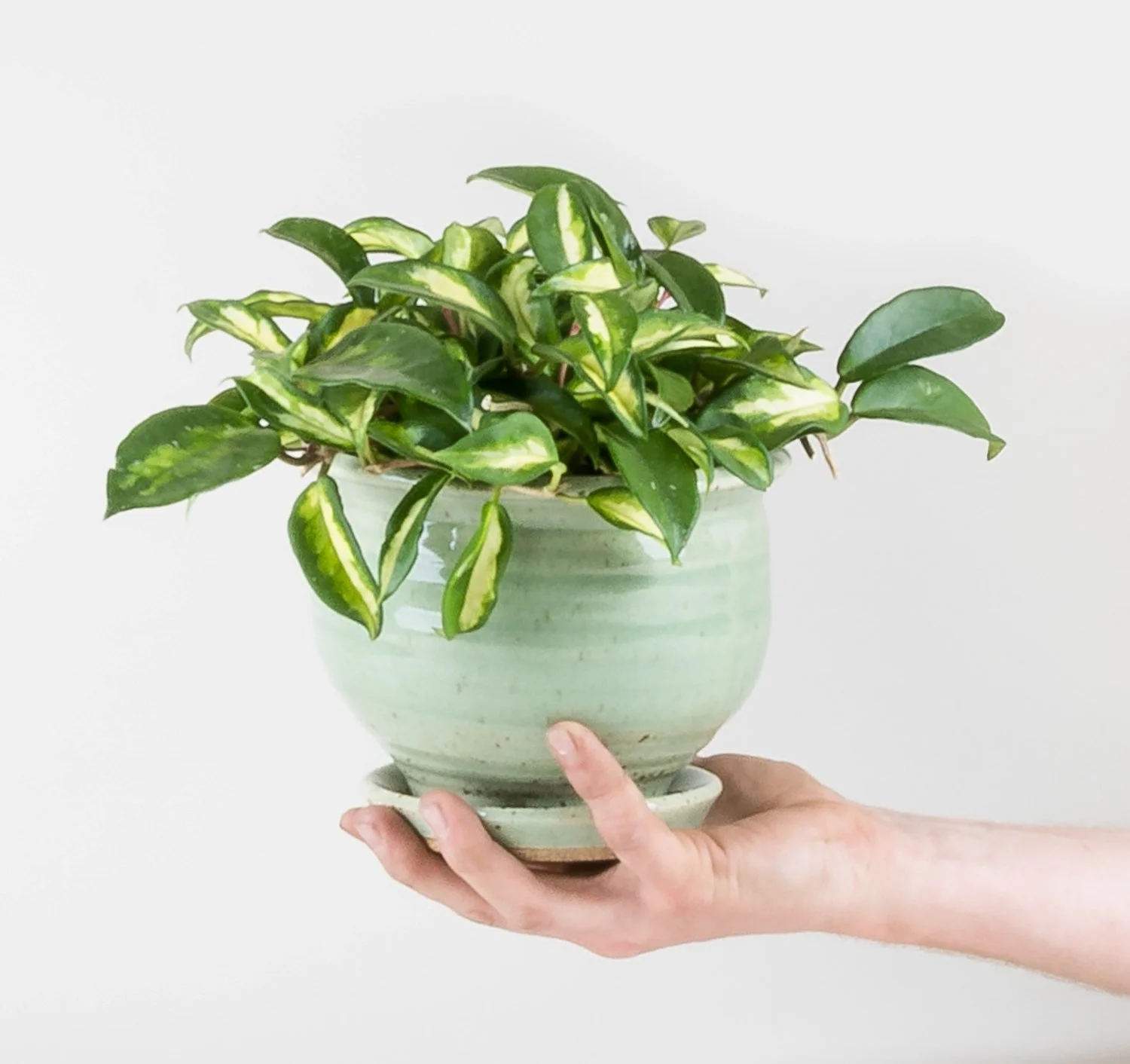
Hoya carnosa ‘Krimson Princess’
Why it’s special: This Hoya carnosa cultivar features inner variegation on its leaves, displaying cream, yellow, lime green, and pink. The variegation looks like watercolor!
What it likes: Like its variegated cousin 'Krimson Queen,' this Hoya needs a bright spot where it won’t receive too much direct sun. Water like a carnosa.
What it dislikes: Low-medium light, cold drafty windows. Particularly sensitive to overwatering.
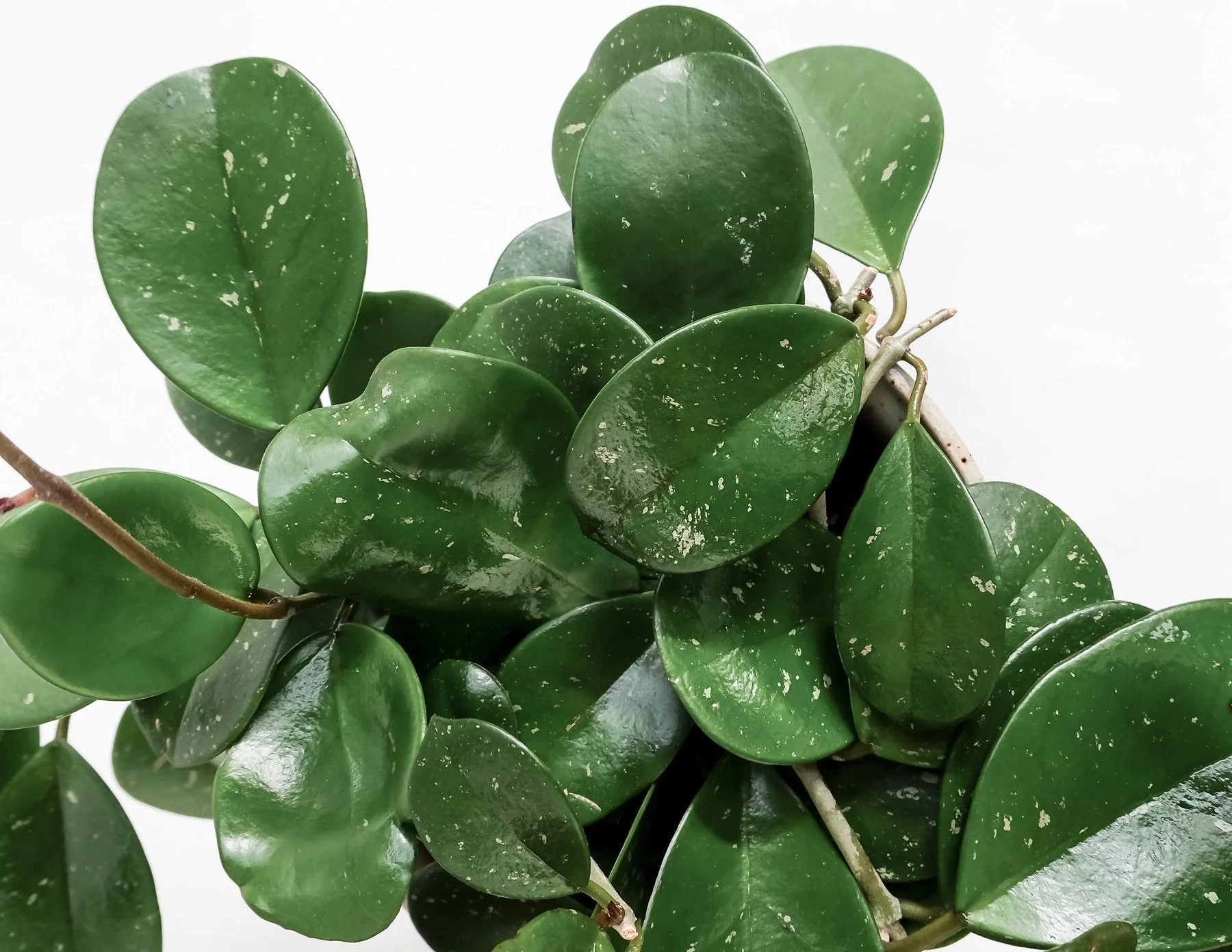
Hoya obovata
Why it’s special: This Hoya has incredible dark green, round, silver-flecked leaves. Compared to many Hoyas, this one is relatively fast to grow and sets flower earlier than most. And the blooms smell like chocolate!
What it likes: This is one of the hardier Hoyas we’ve encountered. It still wants bright light, but is tolerant of medium light.
What it dislikes: Over-watering; those big leaves hold a lot of water. Wait until it puckers before watering. Also dislikes direct sun, and dark drafty corners.
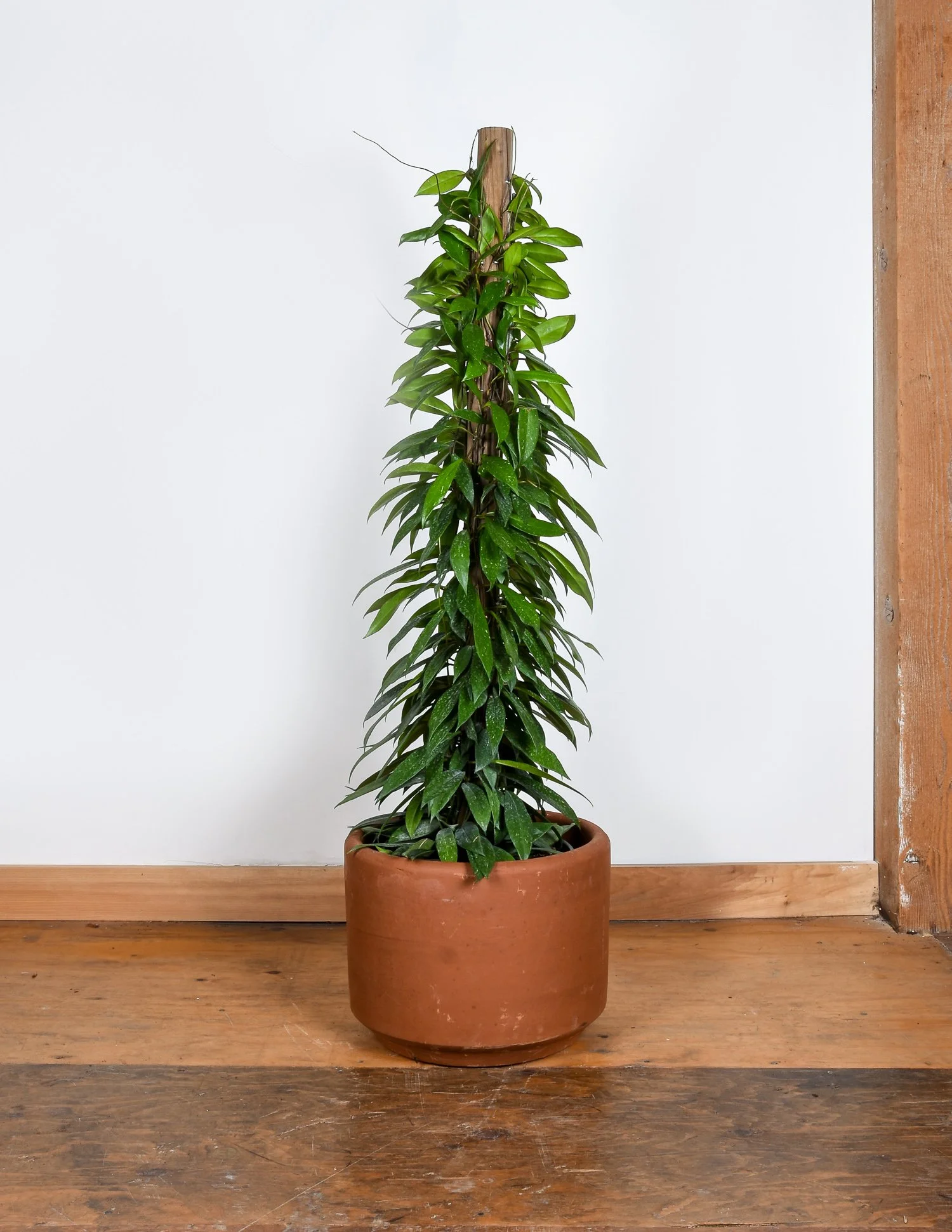
Hoya pubicalyx
Why it’s special: Those leaves! Long, angular, and splashy, this Hoya also shoots out vines that grow in a more upright habit than carnosa. Can also take some direct sun (with regular water) and can sunstress to a beautiful color. Also, this plant is easily trained up a support pole or left to cascade down out of its pot.
What it likes: Bright light, regular water during the growing season, and an airy soil mix.
What it dislikes: Dark corners and soggy soil.
Honorable mentions: Hoya australis, Hoya lacunosa, Hoya lanceolata var. bella, and Hoya kerrii.
More about Hoya carnosa
Hoya carnosa has historically been the most widely cultivated Hoya in the Western world. The plant has been hybridized with other species and cultivated for genetic mutations of the leaves and blooms to give us new plants with new names. We've already mentioned Hoya carnosa ‘Krimson Queen’ and ‘Krimson Princess’—two variegated forms of the plant—but here are some other fun variations on the original wax plant:
Hoya carnosa ‘Chelsea’ — thicker, wider leaves that are slightly cupped, and a growth pattern that gracefully cascades under the weight of its heavy leaves
Hoya carnosa ‘Krinkle 8’ — leaves are slightly cupped and have 8 cute dimples that make the leave look like empty pea pods
Hoya carnosa ‘Compacta’ — leaves are folded in on themselves and never fully open, giving this plant an unusual rope-like appearance
Hoya carnosa ‘Jade’ — leaves are brighter green than the standard H. carnosa
Hoya ‘Mathilde’ — a hybrid between H. carnosa and H. serpens, leaves are splashy and coin-sized
Hoya ‘Chouke’ — from the same seedpod as H. 'Mathilde,' H. carnosa x H. serpens hybrid with small leaves and little to no splash
Hoya ‘Minibelle’ — a hybrid between H. carnosa and H. shepherdii, easy-to-grow variety with elongated leaves
5 Unusual Hoyas for Collectors
Hoya linearis — This Hoya hangs dramatically, making a curtain of needle-shaped leaves.
Hoya imbricata — This Hoya grows cupped, turtleshell-like leaves on its climbing surface. The leaves look like buttons or bubbles covering a tree, wall, moss pole, or climbing board.
Hoya callistophylla — The bright green lanceolate leaves of this Hoya are covered in dark, contrasting veins. This is one of our favorite "foliage Hoyas."
Hoya lauterbachii — This Hoya grows the largest blooms of the genus and it grows soft, pubescent leaves. Fuzzy leaves and umbels of drinking-cup-sized flowers? Yes please!
Hoya spartioides — This Hoya doesn't grow any leaves! All of it's photosynthesis takes place in its stems and its long leaflike peduncles.