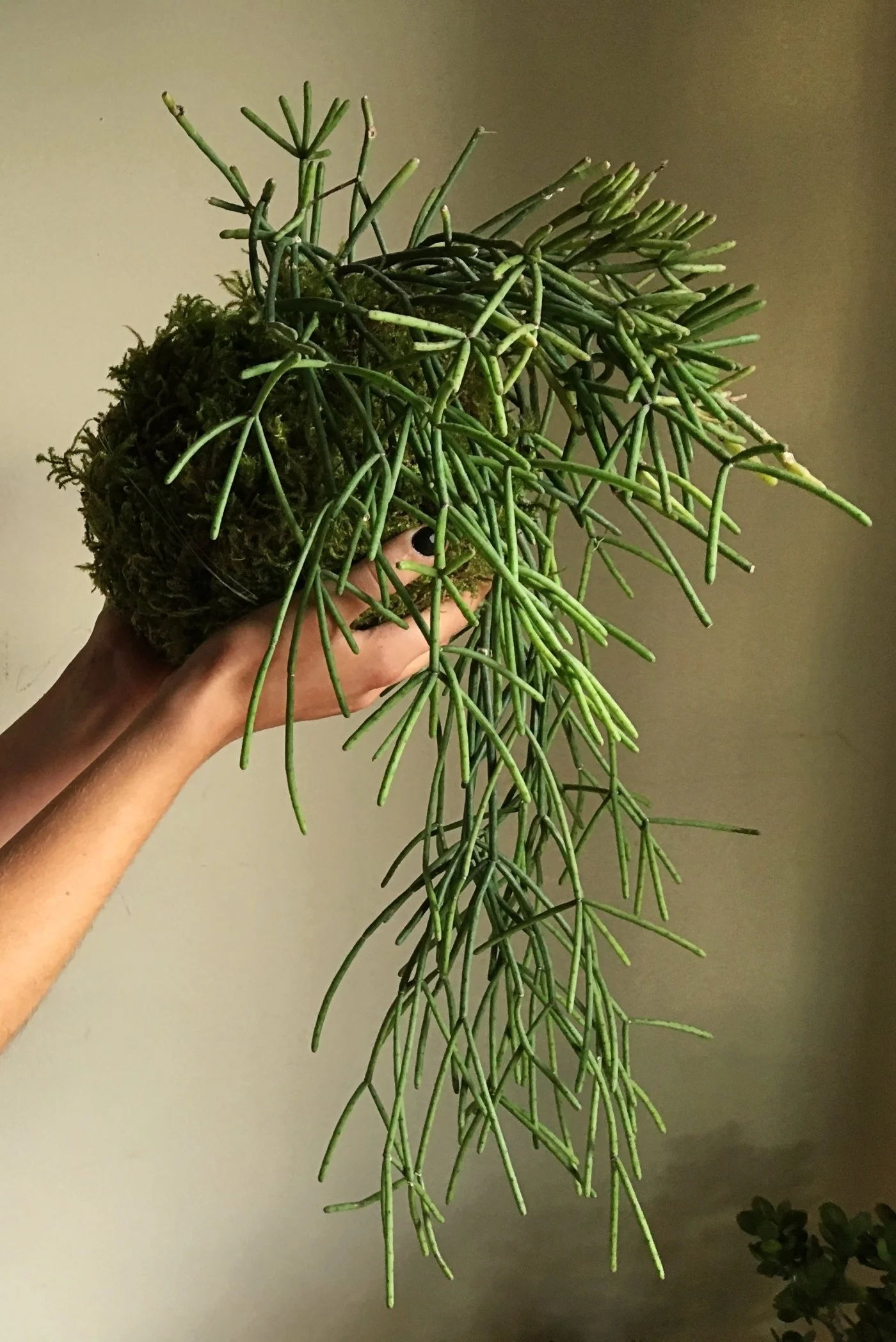
How to Grow Rhipsalis, Hatiora and Other Epiphytic Cacti
The idea of a “jungle cactus” sounds like a contradiction at first. Jungles are hot, humid, and lush, and cacti grow in the arid, sun-scorched desert. Jungle cactus? How’s that supposed to work?
Like most things in the plant world, it’s not so black and white, and there are various genera of cacti that thrive in the shady moist canopy and understory of the jungle. And that’s good news for us, because plants that grow in jungle-like environments usually make better houseplants!
If you’ve ever seen a Christmas cactus, that’s a jungle cactus! These plants grow off the branches of trees in South America and hang like chandeliers. Most jungle cacti blooms are not as showy as those of the Christmas cactus, but even the smaller, semi-transparent flowers of Rhipsalis baccifera are delicately beautiful in their own way.
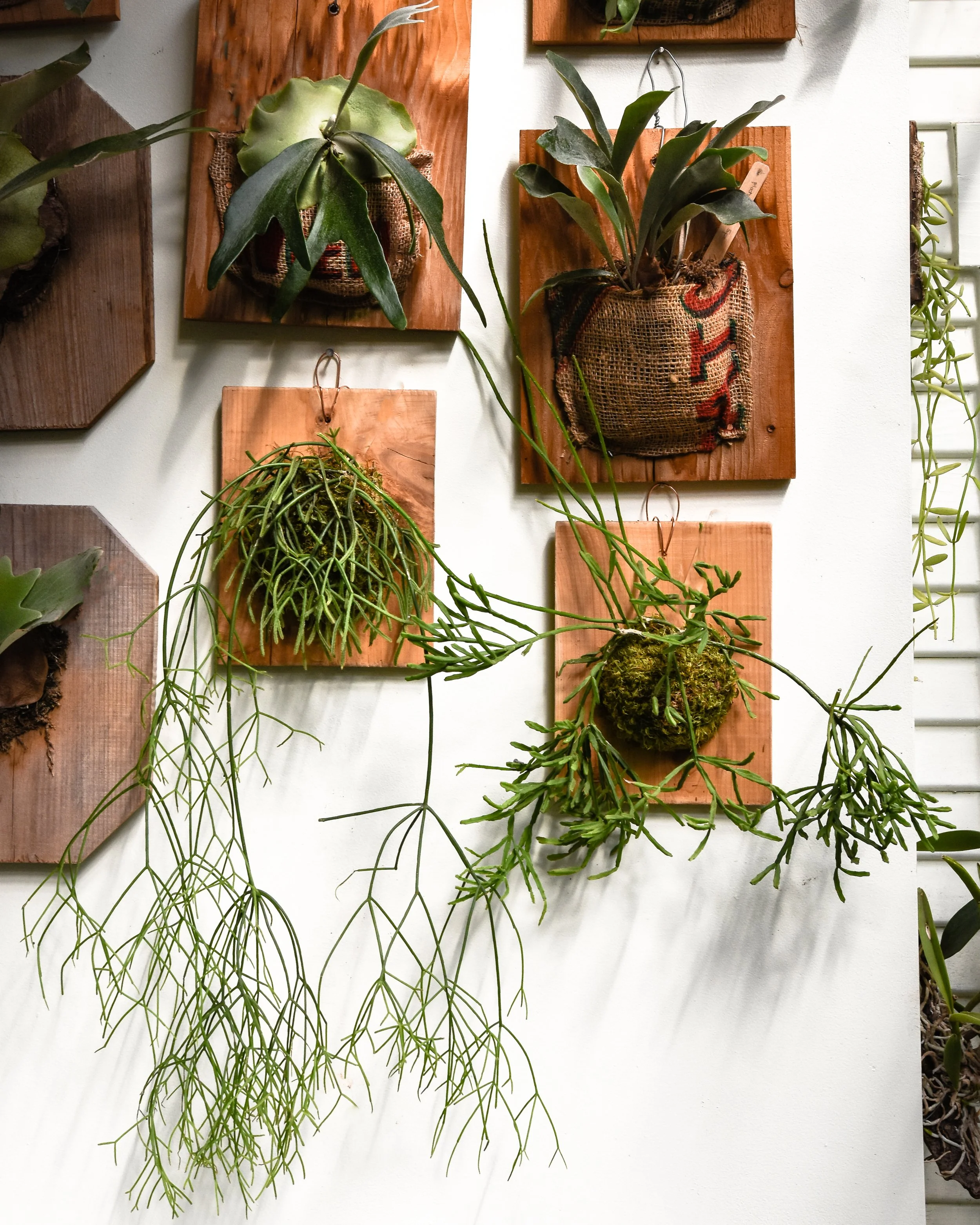
One of our favorite things to do with jungle cacti is mount them and hang them on the wall. We’ve found that species in the Rhipsalis and Hatiora genera are particularly well-suited for this application, as they’re tolerant of lower light, can survive periods of drought, and are epiphytic, requiring little root space to thrive.
General Jungle Cactus Care
Light:
Most jungle cactus can handle direct sun (especially with enough water), but prefer bright, indirect light. Most can even handle low-light situations as long and they are not in soggy soil.
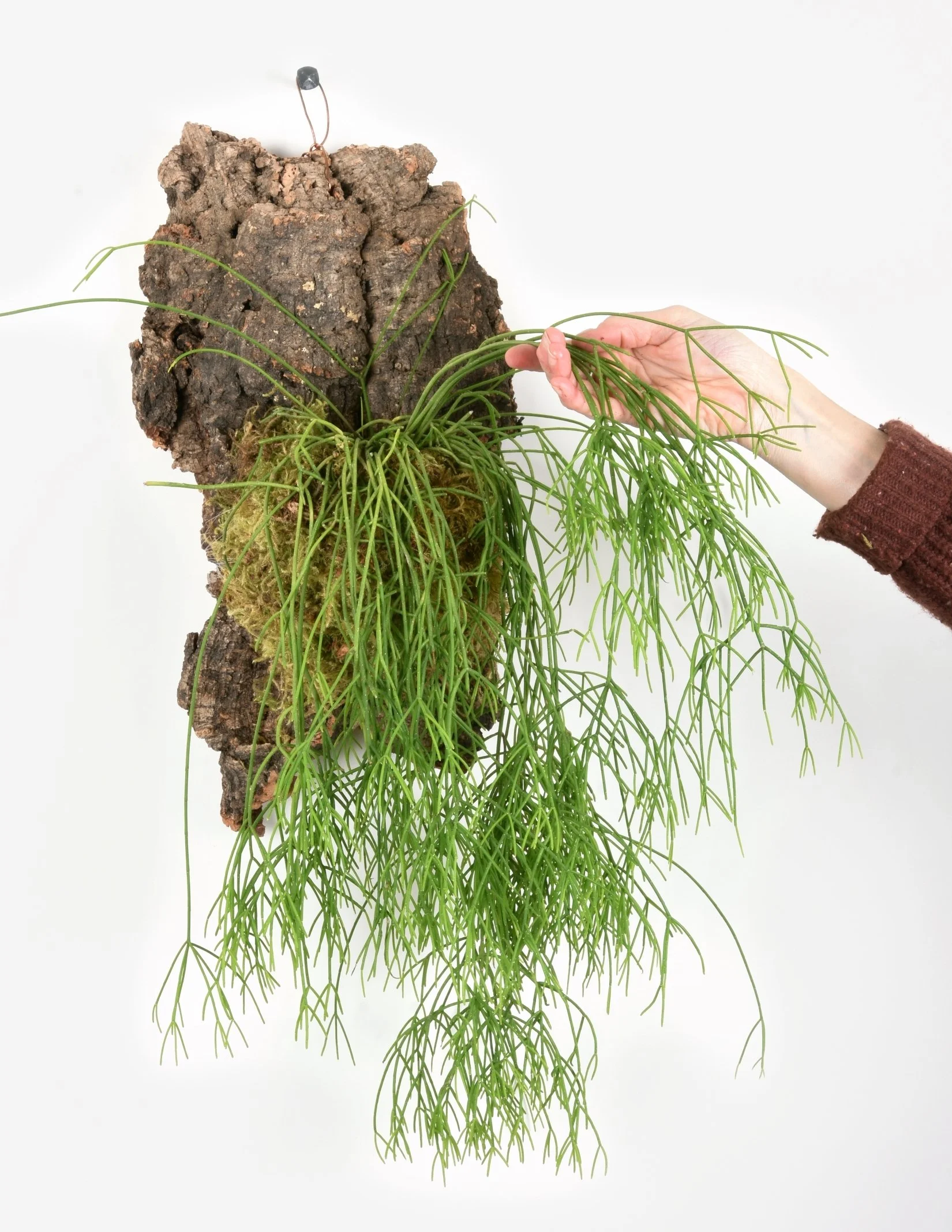
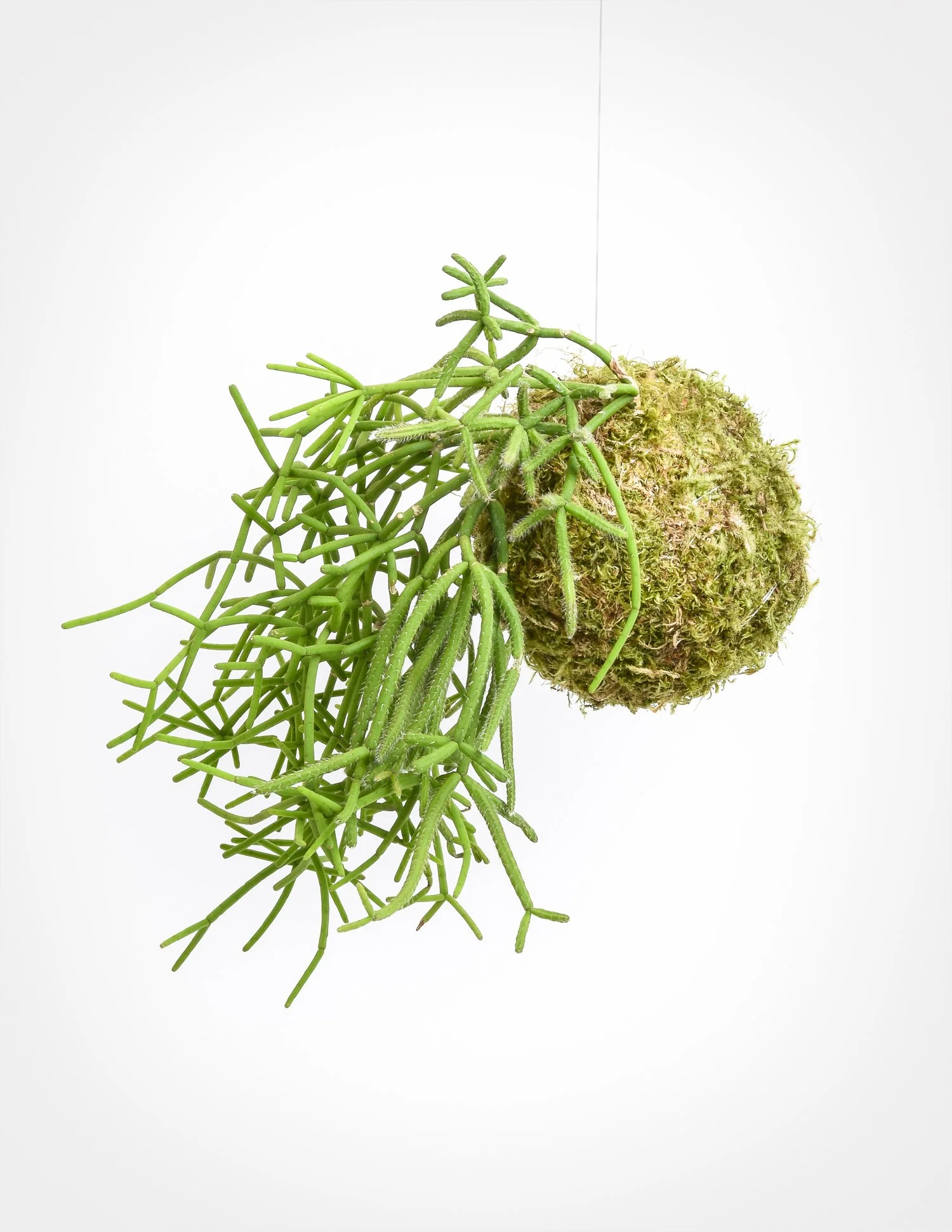
Plants with thinner stems can usually handle lower light situations better than varieties with thicker stem segments. The two types of Rhipsalis below look similar, but the plant with thinner stems mounted on cork is able to tolerate lower light than the Rhipsalis in the kokedama.
Water:
Jungle cacti store water in their stems and can handle periods of drought. Thinner stems usually means more regular watering. Thicker, wider, and more rigid stems suggest less frequent waterings. To keep these plants happy, we prefer to use a chunky, well-draining substrate. A soil mix amended with perlite, pumice, or orchid bark works great. We also prefer to keep these plants tight in their pots. It’s easy to lose a jungle cactus from up-potting too quickly.
We’re usually watering our jungle cacti every 7-12 days in the summer and every 12-20 days in the winter.
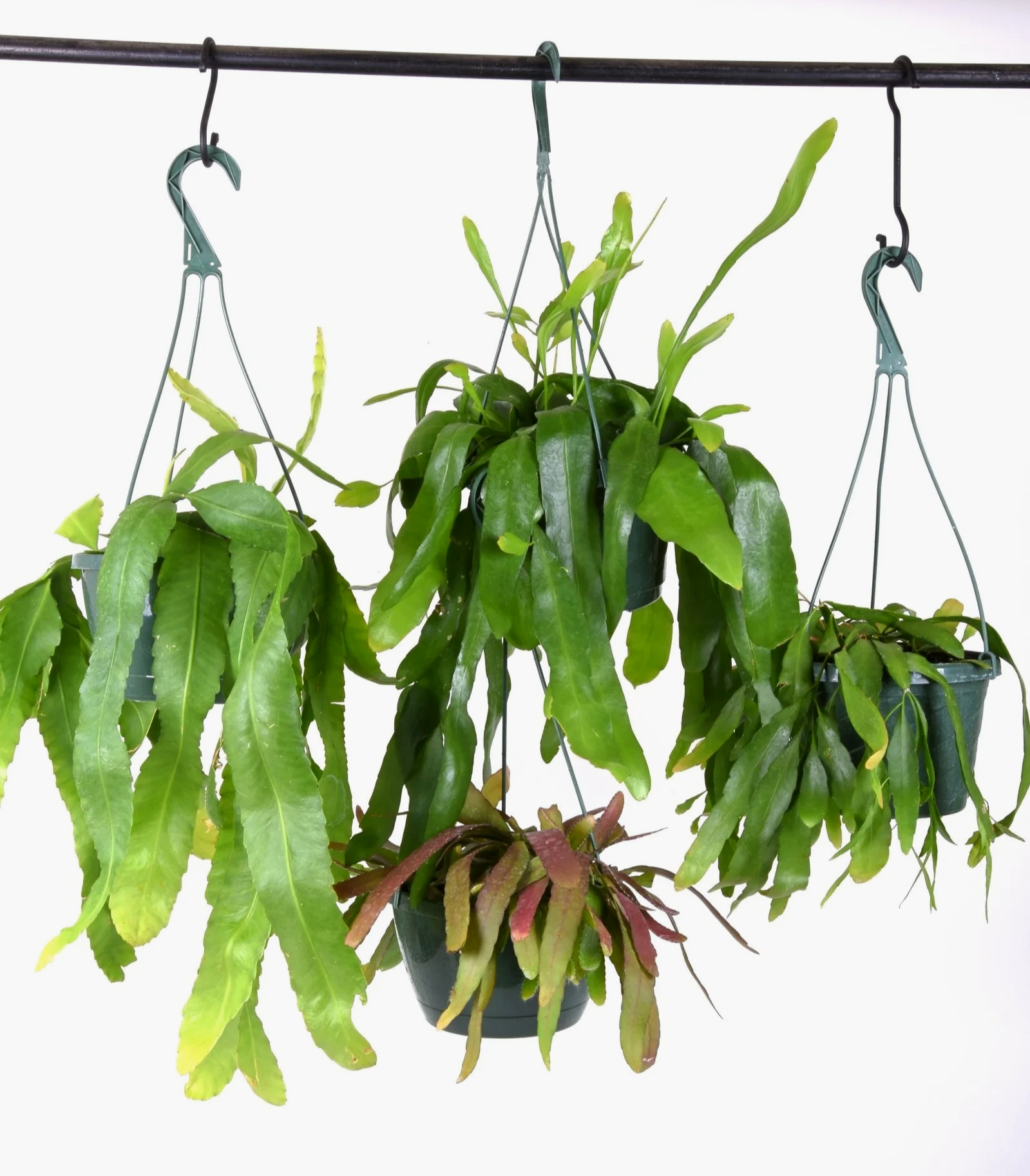
Common Forms of Jungle Cacti
“Noodle” Danglers
At the shop, we often call jungle cacti with long round stems “noodle” cacti. Some of our favorites are Rhipsalis baccifera, Rhipsalis capilliformis, Rhipsalis campos-portoana, Rhipsalis floccosa. These plants are easy to grow, highly adaptable, and make dramatic living chandeliers.
Flat, Short Segments
Many jungle cacti are made up of lots of short, flattened stems that look like leaves. The most famous cactus that has this adaptation is the Christmas cactus. These plants generally look their best with bright, indirect light, but can handle some direct sun and longer periods of drought than the “noodle” species. Some segmented cacti species are Schlumbergera truncata, Schlumbergera gaertneri, Rhipsalis elliptica, Rhipsalis rhombea, and Rhipsalis oblonga.
Long, Flat Stems
Some jungle cacti have long, tapelike stems that climb and hang from trees. The most famous is probably the Queen of the Night cactus, Epiphyllum oxypetalum. The ric-rac catus (Epiphyllum anguliger), orchid cactus (Epiphyllum), and fern-leaf cactus (Selenicereus chrysocardium) are other examples of long, flat-stemmed jungle cacti. Although many of these plants are able to withstand drought, we strive to keep them lightly moist to keep their growth points active. This helps the plant grow longer, more dramatic stem segments.
Other examples include Lepismium bolivianum, Lepismium houlletianum, Strophocactus wittii, and Selenicereus anthonyanus.
In-Betweeners
Because these plants are highly adaptable and reactive to their environment, many look different depending on their growing conditions.
For example, Hatiora salicornioides grows thick short segments in bright light, but in lower light they grow thinner, longer segments that arch and hang much more daintily.
If Rhipsalis pilocarpa is grown in bright light, it looks like a clumping, short segmented cactus. But in medium light and regular water, the segments can grow multiple feet in length like a “noodle” cactus.
Because these plants can look so different depending on their growing conditions, we can’t stop collecting more and more to see how they adapt in different parts of the home.